Process
How a product
comes together.
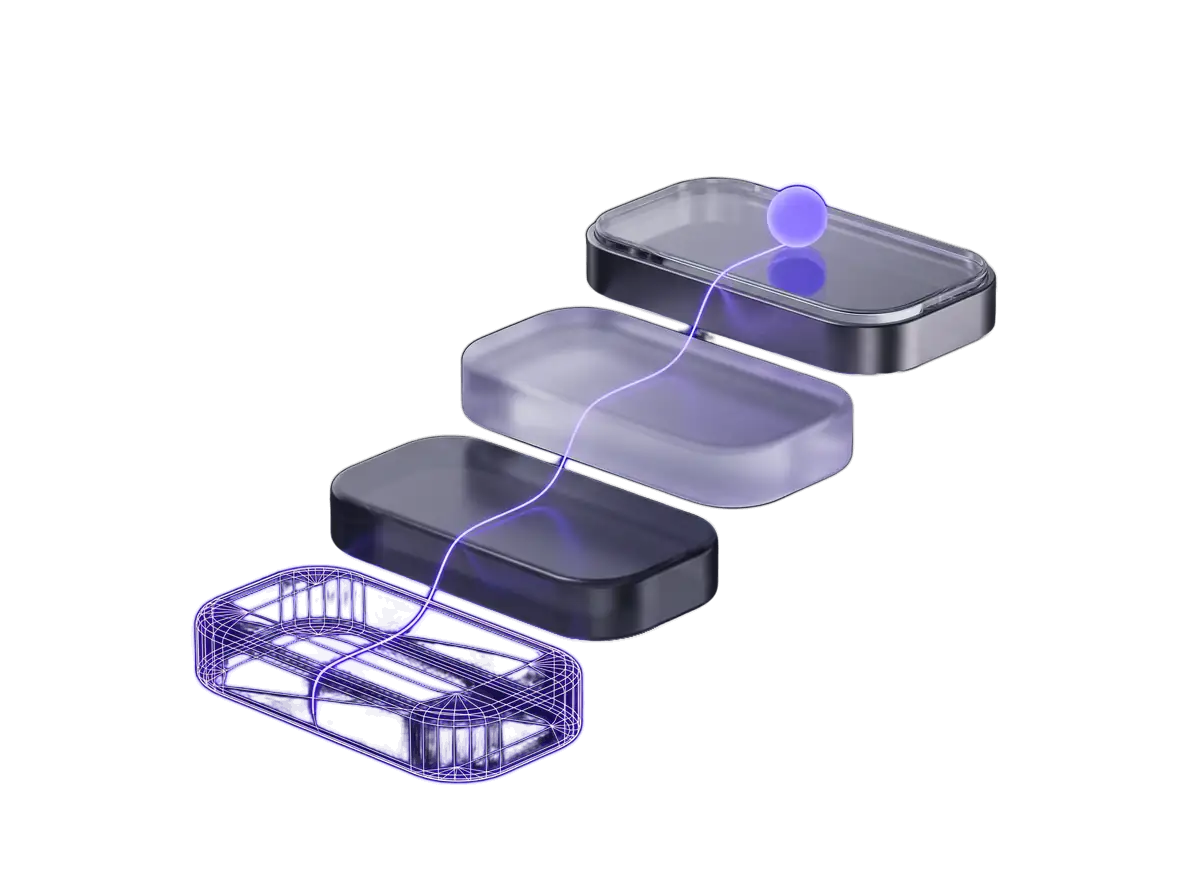
Four stages, short cycles and a demo every week, so you always know what has shipped and what is next.
Process
A rhythm built for momentum.
Frame the problem, shape the experience, build in short cycles and keep improving after launch.
Frame
Week 1–2We get to the heart of the problem with workshops and interviews, then agree on the first release and how we will measure it.
- Scope & roadmap
- Success metrics
- Fixed quote
Shape
Week 2–4Flows and interfaces take shape as prototypes you can click, tested with real users before engineering starts.
- Prototype
- Usability findings
- Design system
Build
Week 3–10Engineering works in short cycles with a demo of working software every week on a production-like environment.
- Weekly demos
- Test suite
- Release pipeline
Evolve
OngoingWe launch, watch real usage and keep improving, or hand over to your team with documentation and pairing.
- Launch plan
- Analytics
- Handover
AI is in our DNA.
We engineer the future —
innovation without limits.
Dynaamx × AI
Senior people.
Multiplied.
AI doesn't replace anyone here. Each stage is led by a senior person with a crew of AI copilots built into how we deliver: they research, draft, test and check at machine speed, while the lead makes every call and signs off what ships.
Frame
- Research: Maps the market
- Synthesis: Clusters interview notes
- Estimates: Drafts the quote model
Aumair Malik
Principal Engineer
Aumair decides the scope, the priorities and the price.
Shape
- Variants: Explores layout options
- Copy: Drafts interface text
- Access: Checks accessibility
Anastasiia Melnyk
Design Lead
Anastasiia decides what users see and what gets tested.
Build
- Pairing: Codes alongside engineers
- Tests: Writes test cases
- Review: Pre-reviews every change
Haider Khan
Engineering Lead
Haider decides the architecture and every merge.
Evolve
- Signals: Flags unusual usage
- Triage: Sorts user feedback
- Docs: Keeps the docs current
James Mitchell
Delivery Lead
James decides what ships next, and when.
Machine speed. Human judgment.
Every release carries a senior person's name.
AI toolchain


Engagement models
Four ways to work together.
Every model is senior-led and AI-equipped; they differ in how scope, time and the team are set.
- 01
Fixed-Scope Project
A framed scope, a fixed quote and a demo of working software every week: the way most Dynaamx products are built, from the first workshop to launch.
- 02
90-Day MVP
A validated idea taken from concept to a production-ready first release in three months, at a fixed quote.
MVP Development - 03
Dedicated Team
A senior-led team embedded with yours, working in your tools and following your conventions for as long as the roadmap needs it.
About Dynaamx - 04
Managed Support
Monitoring, incident response, upgrades and steady improvement after launch, with service levels agreed in writing.
Application Support
How we work
Four rules we keep.
- 01
Senior people, small teams
Every project is run by people who have shipped products before. No hand-offs to juniors after the pitch.
- 02
Working software every week
Progress is something you can click, not a status report.
- 03
Plain language
We explain trade-offs clearly so decisions are made by the people who own the product.
- 04
Own the outcome
We measure success by what the product achieves after launch, not by the hours we bill.
Frequently Asked Questions
Good questions.
Straight answers.
Who owns the code and designs?
You do, from the first commit. Repositories, design files and cloud accounts live in your organization, and we work inside them.
How quickly can we start?
Usually within two weeks of the first call. A short framing phase comes first so the build starts with a clear scope and a fixed quote.
How do you keep us updated?
A shared channel for daily questions, a written update every week and a live demo of working software at the end of each cycle.
Can you work with our in-house team?
Yes. We often pair with in-house engineers and designers, follow your conventions and leave documentation behind when we step back.
Which technologies do you use?
We default to proven, well-supported tools such as TypeScript, React and PostgreSQL, but choose the stack around your product, team and constraints.
What happens after launch?
Most clients keep a smaller team with us for improvements and support. Others take over fully after a planned handoff period.
Start a project
Got an idea worth building?
Share a few lines about what you have in mind and we'll reply with next steps.